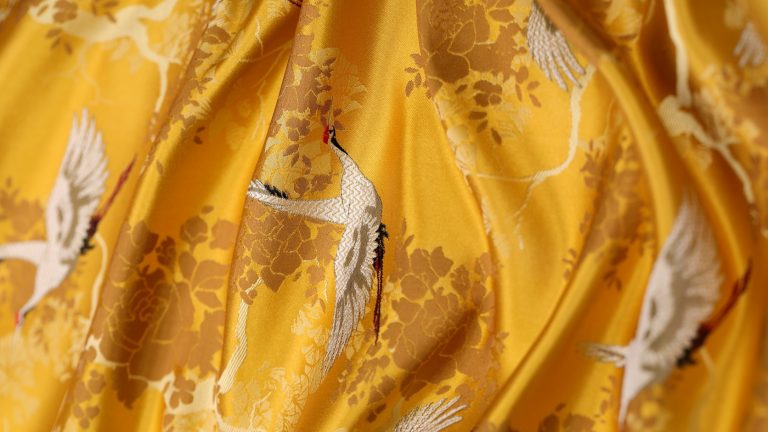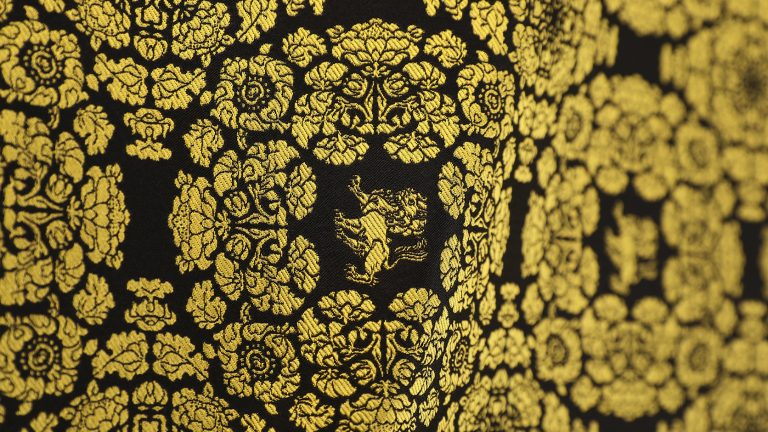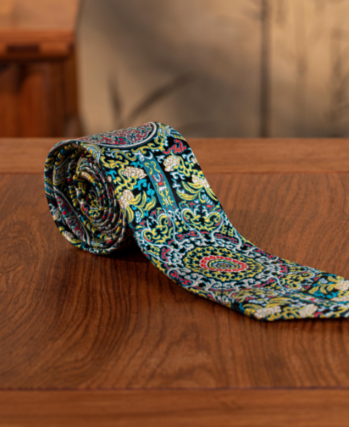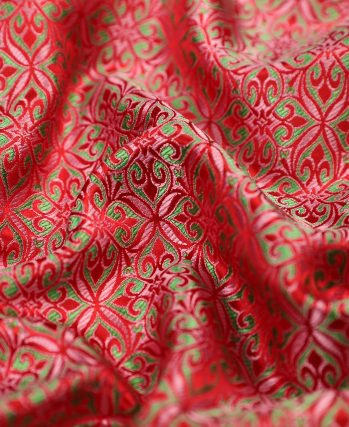
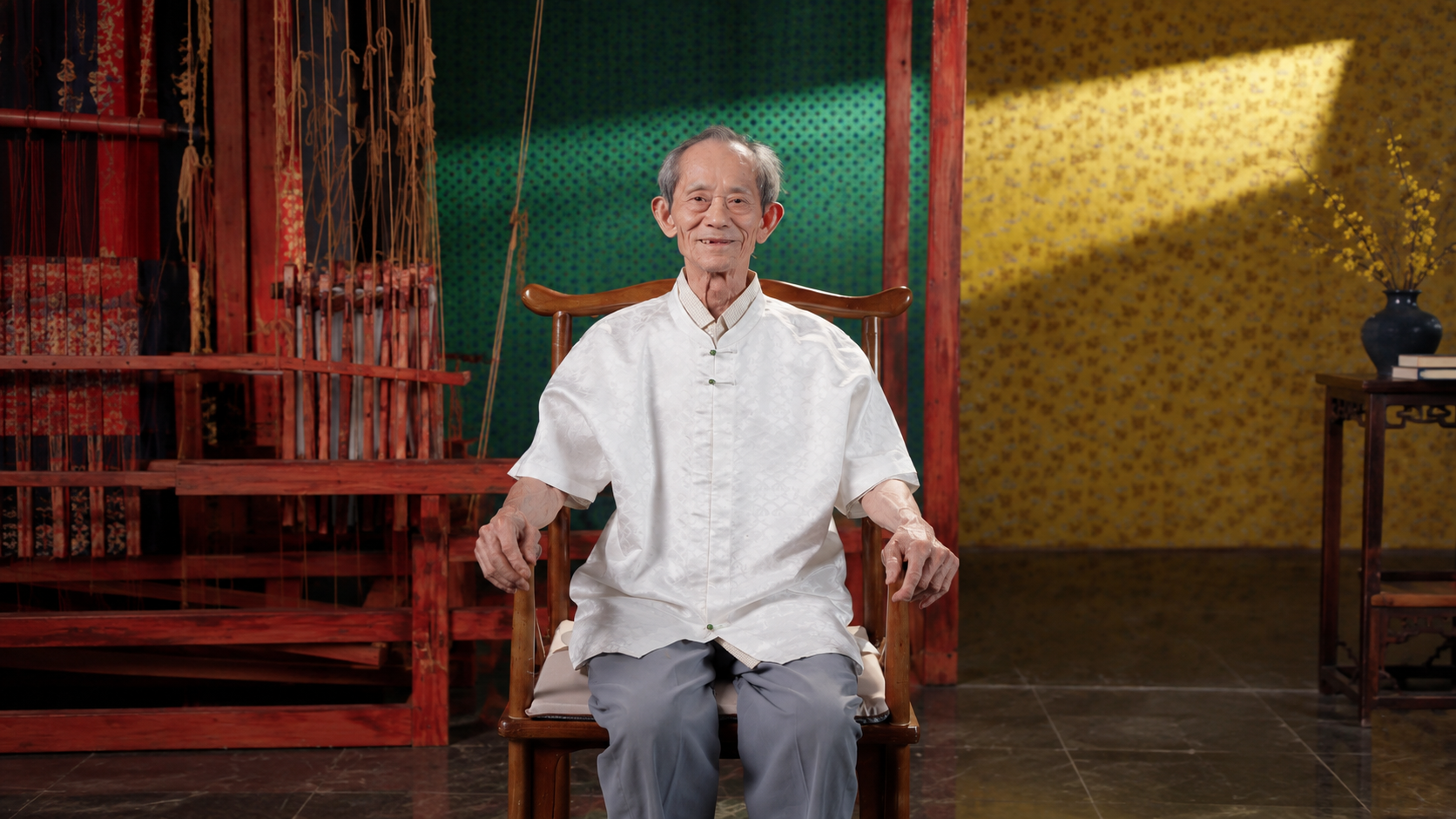
At 76, this master dyer and weaving expert is the living bridge between ancient Shu brocade and its future.
Who Is Tang Taikang?
If Shu brocade is the “Mother of Chinese Brocades,” then Tang Taikang is one of the people responsible for keeping her alive.
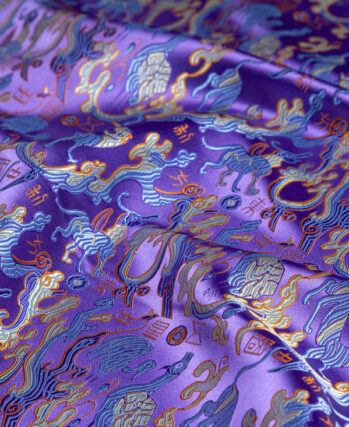
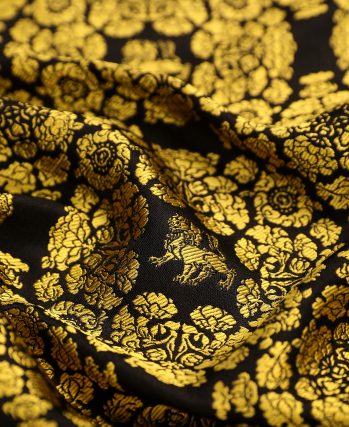
Tang Taikang (唐太康) is a provincial-level representative inheritor of Shu brocade weaving techniques—a craft recognized as a National Intangible Cultural Heritage of China. He is one of the few remaining masters who understands every stage of Shu brocade production, from dyeing raw silk to operating the complex wooden looms that create its intricate patterns.
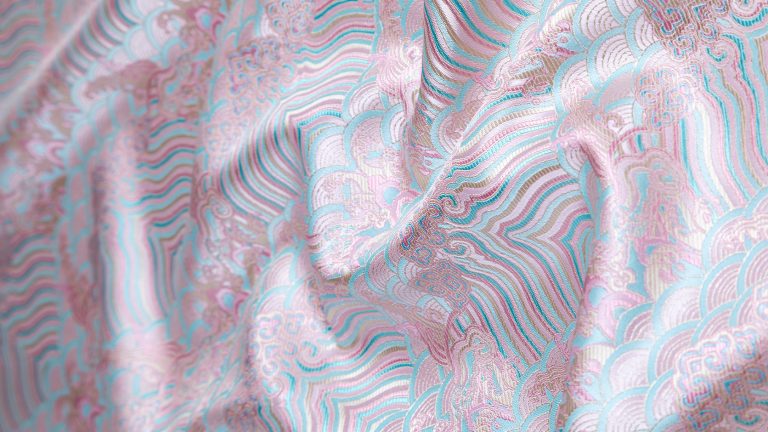
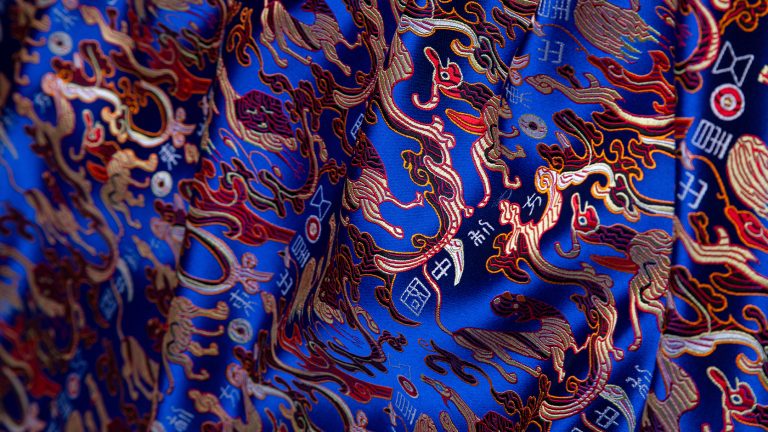
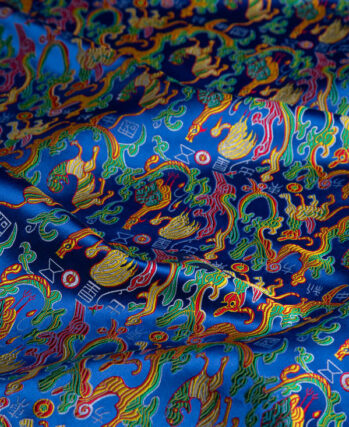
His journey began in 1971, when he joined the Chengdu Shu Brocade Factory as one of its first batch of dyeing workers. He was assigned to the lian ran (炼染) process—the art of refining and dyeing silk threads. This is not a peripheral skill. In Shu brocade, color is everything. The vibrancy of the finished fabric depends entirely on how the silk is treated and dyed before it ever touches a loom.
For over five decades, Tang Taikang has dedicated his life to mastering and preserving this craft.
Why Dyeing Matters More Than You Think
To understand Tang Taikang’s significance, you need to understand what lian ran actually involves.
Before the 1980s, Shu brocade dyeing followed ancient methods using natural plant and mineral pigments. These traditional dyes produced colors of extraordinary depth and richness—but they were also slow, labor-intensive, and dependent on knowledge passed down orally from master to apprentice.
Tang Taikang was trained in this old tradition. He learned to read the subtle variations in dye baths, to judge color by eye in natural light, and to adjust formulas based on the temperature and humidity of the day. This kind of knowledge cannot be learned from a book. It exists only in the hands and eyes of practitioners who have spent decades at the dye vat.
When synthetic dyes were introduced in the 1980s, Tang Taikang adapted alongside the industry, but he never abandoned the foundational principles of his training. He also witnessed firsthand the shift in materials: where Shu brocade once used silk for both warp and weft threads, modern production often substitutes synthetic threads for the weft to reduce cost.
His perspective on these changes is nuanced. He understands the economic pressures facing the industry, but he also carries the memory of what has been lost.
The Man Who Rebuilt a Han Dynasty Loom
One of Tang Taikang’s most remarkable achievements is not a piece of fabric—it is a machine.
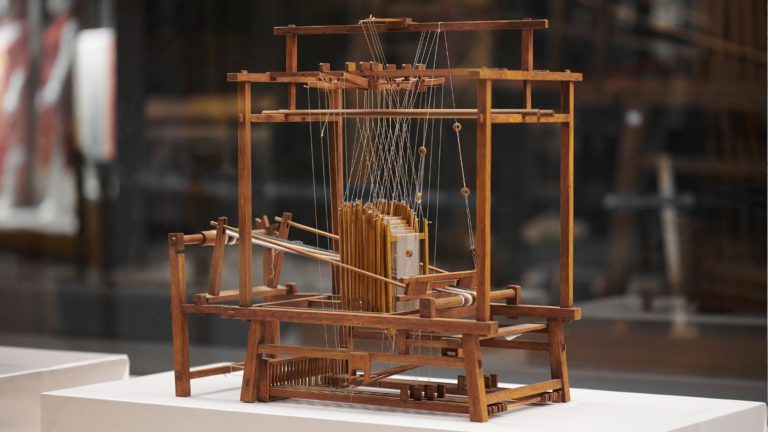
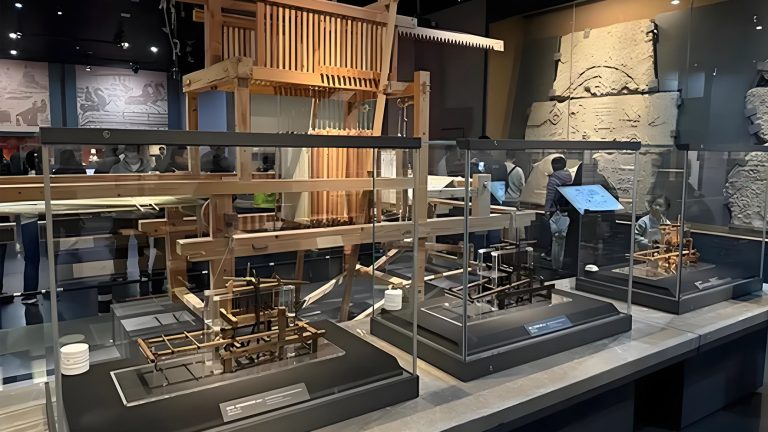
He reconstructed a huakuang-type brocade loom based on examples excavated from the Laoguanshan Han Dynasty tomb site in Chengdu. The Laoguanshan finds, dating to around the 2nd century BC, are among the most important archaeological discoveries related to early silk production. The looms found there represent the technological pinnacle of Han Dynasty textile engineering.
Tang Taikang’s reconstruction allows modern audiences to see—and understand—how Shu brocade was actually made two thousand years ago. The loom is not a museum prop. It is a working machine, built and operated by someone who has spent his life at the loom.
This project reflects something essential about Tang Taikang’s approach to heritage: he is not interested in preserving Shu brocade as a frozen relic. He wants it to work—to be demonstrable, teachable, and alive.
Sharing Knowledge Beyond the Workshop
Tang Taikang’s commitment to Shu brocade extends well beyond his own studio.
He has become a regular presence at public lectures, community events, and educational workshops. At a 2024 legal protection seminar for intangible cultural heritage in Chengdu, he sat through the entire session and then shared his knowledge of weaving techniques with the audience, while also candidly discussing the challenges facing the industry.
At a community cultural event in Chengdu’s Gaoxin District in 2025, he delivered a comprehensive presentation on the history, craftsmanship, and cultural value of Shu brocade, followed by a Q&A session where residents asked him about everything from modern design applications to where they could purchase authentic pieces.
Even at 76, he continues to share what he knows—from his rooftop, at community centers, in university lecture halls. His willingness to speak openly about both the beauty and the difficulties of this craft makes him a rare and valuable voice.
What Tang Taikang Represents
For an American audience encountering Shu brocade for the first time, Tang Taikang is more than a craftsman. He is a living archive.
He holds knowledge that cannot be digitized or reproduced: the feel of silk threads at different stages of processing, the visual language of traditional color palettes, the subtle adjustments required to operate a Han Dynasty-style loom. When he is gone, much of this knowledge will be gone with him—unless it is successfully passed on.
That is why his decision to take on an apprentice matters. That is why his public lectures matter. And that is why the international attention now being paid to Shu brocade—at expos, in fashion collaborations, through cultural exchanges—matters.
Tang Taikang has spent 55 years with Shu brocade. His life story is, in many ways, the story of the craft itself in modern China: a journey from ancient tradition through industrial transformation to a fragile but determined revival.
He is not just a keeper of the past. He is the reason the past still has a future.
Tang Taikang is a provincial-level representative inheritor of Shu brocade weaving techniques under China’s National Intangible Cultural Heritage program. He works in Chengdu, Sichuan Province, and continues to teach, lecture, and advocate for the craft he has served since 1971.